Submissions
Armbar: How to Finish It From Guard and Mount, Step by Step
Learn the armbar from closed guard and mount: grips, hip angle, knee pinch and a slow finish. Fix the 5 mistakes that let the arm escape and film your reps to check.
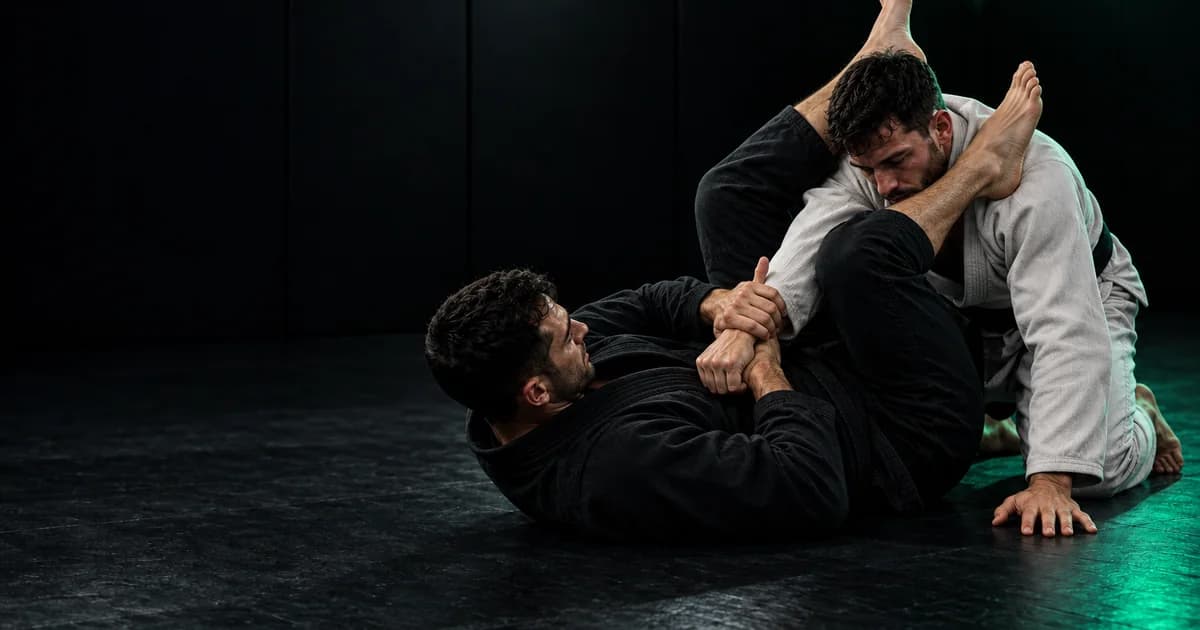
An armbar hyperextends your opponent's elbow by trapping their arm between your legs, pinning it to your chest with the thumb pointing up, and lifting your hips against the joint. To finish it, you need three things: control of the arm above the elbow, your knees pinched tight, and your hips positioned so the elbow sits across them. Then you apply pressure slowly, and your partner taps.
Here is how to hit it from the two positions where most armbars happen, closed guard and mount, plus the mistakes that let the arm slip out.
Safety first: finish slowly, tap early
The armbar is a high-risk submission for the elbow. A study of eight Brazilian jiu-jitsu tournaments by Scoggin and colleagues found the elbow was the most commonly injured joint, and the armbar was the most common mechanism. In practice:
- As the attacker, add pressure over two or three seconds. Stop the instant your partner taps, says "tap", or goes limp.
- As the defender, tap as soon as you feel the elbow straighten against the hips. Do not wait for pain.
- In drilling, use 20 to 30% pressure. Your partner is lending you an elbow.
Armlocks are legal for adult competitors at every belt under IBJJF rules. Check your event's current rulebook, and our IBJJF weight classes tool helps you find your division.
The four details that finish every armbar
- Thumb up. Your opponent's thumb points toward the ceiling, so the elbow joint faces your hips.
- Elbow past your hips. The elbow sits just beyond your pelvis. If it sits on your stomach, you cannot lever it.
- Knees pinched. Squeeze your knees together around the shoulder. Gaps let the arm rotate out.
- Heels down. Your leg over the head drives heavy to stop them from stacking or sitting up.
Armbar from closed guard
- Break posture. Pull your opponent's head down with your legs and a collar grip.
- Control the arm. Grip their right sleeve or wrist with both hands and pin it across your chest.
- Open your guard and put your left foot on their hip. This lets you shift your angle.
- Pivot. Swing your hips out to your left until your body sits at about 90 degrees to theirs.
- Swing your right leg over their head. Your calf crosses the back of their neck and your heel drives down.
- Pinch your knees and bring the arm to your chest. Keep the thumb pointing up.
- Lift your hips slowly until your partner taps.
The pivot is where most people fail. If your body stays square under your opponent, the elbow never reaches your hips. Turn until you face their knee.
Armbar from mount
- Climb high. Walk your knees up toward the armpits so your opponent's arms go up.
- Trap an arm. Slide your right hand under their left elbow and pin that arm to your chest.
- Post your left hand on their chest or the mat for balance.
- Pivot on your right knee so your left foot steps up by their head.
- Swing your left leg over their face and sit your hips close to their shoulder. Keep your butt tight to the shoulder.
- Fall back while you keep the arm hugged to your chest and your knees pinched.
- Lift your hips with the thumb pointing up.
Sit close. If you leave space between your hips and their shoulder, they pull the elbow out as you fall back.
The 5 mistakes that let the arm escape
| Mistake | What happens | Fix |
|---|---|---|
| Loose knees | Opponent turns their thumb down and slips out | Squeeze your knees and ankles together |
| Elbow on your stomach | You pull but nothing locks | Scoot your hips toward their shoulder until the elbow passes your pelvis |
| Light leg over the head | Opponent sits up and stacks you | Drive that heel down to the mat |
| Grabbing only the hand | Arm rotates and escapes | Hug the arm high near the elbow, then control the wrist |
| Yanking the finish | Injury risk, and a strong partner resists | Add pressure slowly over two or three seconds |
How your opponent defends, and what you do next
- They grab their own hands. Break the grip by pushing their wrist with your foot or hooking your arm under their forearm, then finish.
- They stack you. Keep your heel heavy. If they get too high, switch to a triangle. Our triangle choke guide shows the transition.
- They pull the elbow out. Follow it with an omoplata or a kimura.
The best armbars come from chains. Drill armbar to triangle to omoplata until you switch without thinking.
When you hold side control and your opponent bends an arm to frame, pin that wrist and learn the americana lock, the shoulder lock that sits next to the armbar in your top game.
How to drill the armbar
Do five reps per side from guard, then five from mount, at 20% pressure. Then run positional rounds: start in closed guard, attacker hunts only the armbar, defender only defends. Switch every minute.
Common questions
Is the armbar legal for white belts?
Under IBJJF rules, armlocks like the straight armbar are allowed for adult competitors at every belt level. Kids divisions and other organizations may use different rules, so check your event.
Why does my armbar never finish?
The most common reasons are an elbow that sits on your stomach instead of past your hips, loose knees, and a thumb that points sideways. Fix those three before adding strength.
Armbar or triangle from guard?
Attack both. When your opponent defends the armbar by pulling their arm back, the triangle often opens, and the reverse is true too.
How hard should you apply an armbar in training?
Slowly, over two or three seconds, and stop at the first tap. The goal in training is control, not damage.